Tag: mhra

Valsartan recall widens
The Valsartan recall widened last month following updated advice from the Medicines and Healthcare Regulatory Authority (MHRA).
Batches of products containing Valsartan that were supplied by Teva UK Ltd and Mylan are being recalled in the UK. This follows on from a drug alert earlier this year that was issued after the discovery that some Valsartan products were contaminated. Legal cases are already underway, and this latest recall involves further batches of the product.
An immediate suspension and quarantine of the additional affected products has been ordered.

Were you affected by the cough syrup mould recall?
Were you affected by the cough syrup mould issues that came to light over summer? In the midst of the season for colds and coughs, you may want to take heed of this warning if you’re not aware of it already.
Over summer, a formal recall was issued with the UK’s medicines regulator, the Medicines and Healthcare products Regulatory Agency. This was a Class 2 Medicines recall for own-brand glycerine and blackcurrant cough syrup products manufactured for children by Bell, Sons & Co.
As these are marketed as own-brand products, it’s the likes of Asda, Morrisons, Sainsbury’s and Tesco at the centre of this recall.

Bone cement complications from product recall
A regulator warning earlier this year stemmed from bone cement complications caused by an issue with the product itself.
A risk of the need for revision surgery from the use of Optipac 40 Refobacin Revision and Optipac 80 Refobacin Revision was identified. Manufacturer, Biomet UK Limited, issued a Field Safety Notice at the end of last year. The UK’s medical regulator, the MHRA (Medicines and Healthcare products Regulatory Agency), issued their own recall advice off the back of the findings.
Anyone who has suffered with bone cement complications may find the reason is to do with the product itself as opposed to failed surgery.

Breast implants cancer reporting intensifies
There has been an intensification in the need for breast implants cancer reporting. This stems from a greater focus on identifying links between implants and certain types of cancer.
We know all too well about the problems that breast implants can caused. We’re still battling for justice for women affected by the PIP Breast Implant scandal. We’ve already recovered over £1.3m in damages, and we continue to fight for UK victims here and in France.
Regulators continue to investigate links between breast implants and rare forms of cancer. Both clinicians and patients are being asked to be aware of the need to take precautions and report adverse incidents.

Latanoprost Timolol eye drops recall
A Latanoprost Timolol eye drops recall has been announced by the Medicines and Healthcare Regulatory Authority (MHRA).
The company behind the eye drops, FDC Pharma, are recalling a batch due to what has been classed as an ‘out of specification result for an unknown impurity’ that was identified during testing. Medical professionals are to stop providing the eye drops to patients, and suppliers and distributors are to cease moving the eye drops as well.
The NHS has been pushing the news throughout the Service to ensure batches affected by the Latanoprost Timolol eye drops recall are not used.

Phenytoin 90mg/5ml Oral Suspension immediate discontinuation
There has been an immediate discontinuation of unlicensed medicine Phenytoin 90mg/5ml Oral Suspension and a recall of the product.
The medication, manufactured by Rosemont Pharmaceuticals Limited, is now no longer on the shelves having been recalled and discontinued with immediate affect as a result of worrying data that suggested that the medication becomes difficult to resuspend over shelf-life.
Patients who use the Phenytoin 90mg/5ml Oral Suspension are being told to contact their doctors for more information and advice about the issues that have been identified.
Roche Diabetes Care test strip errors leads to recall
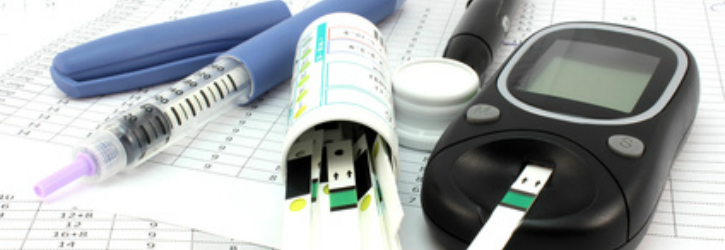
Roche Diabetes Care test strip errors has led to a recall of a number of home-use and point-of-care glucose monitoring systems.
The Roche Diabetes Care test strip errors are for the following systems: Accu-Chek Aviva; Accu-Chek Performa; and Accu-Chek Inform II.
There is a risk of a strip error message that may lead to either falsely high or falsely low blood glucose results reported.
Diabetes testing kit recall
News of a diabetes testing kit recall is said to be “urgent” amid fears of lives at risk over false readings.
The Accu-Chek Aviva and the Accu-Chek Performa are the diabetes testing kits being recalled that could lead to an overdose or an under-dose of insulin that can lead to serious health complications for users.
Advice to patients is to stop using the affected devices and return them to a pharmacy for a replacement.
Resuscitation system recall issued after risk of damage to lungs found
An error with a resuscitation system has been reported to risk damage to lungs, according to information released by the Medicines and Healthcare Products Regulatory Agency (MHRA).
Manufactured by Intersurgical, the manual resuscitation system – named as the “Bag valve mask” (BVM) – risks damage to lungs due to the potential for excess pressure being delivered by the system.
Given that the defect is with a resuscitation system, this recall is an important one as lives may be at risk as a result of it.
Continue Reading…

MHRA announce recall of rectal / pharyngeal temperature sensors
Rectal / pharyngeal (orally inserted) temperature sensors manufactured by Teleflex are a part of a recent recall published by the Medicines and Healthcare Regulatory Authority (MHRA).
The issue with the devices may lead to a misdiagnosis where an inaccurate temperature reading is noted by a medical professional.
With body temperatures often being pivotal to medical diagnosis, this recall is a serious one where patients may be at risk of incorrect advice and treatment off the back of inaccurate temperature readings.
Continue Reading…